When Faye Allen Belt steps onto the grounds of Crownsville Hospital Memorial Park outside Annapolis, Maryland, she is home. In 1961, when she was a child, her family moved within walking distance of this once-segregated state hospital - originally known as the Hospital for the Negro Insane. Many in the local community had viewed it suspiciously, threatening misbehaving kids with "You'll end up in Crownsville." But for her, the tight-knit community, which at its peak housed 5,000 patients and staff, and the hundreds of wooded acres of the hospital campus were an idyll. Her mother worked as a nursing aide there, and her family maintained a large garden and a welcoming home. Her mother would bring homemade food to the wards, and Belt would often return from school to patients hanging out in in her living room. "Because of my mother, I was never afraid to be around a person with mental illness," Belt says. In 1972, when she was 18, she, too, started working at Crownsville and stayed for decades.
The population of the facility dwindled starting in the 1960s as deinstitutionalization efforts took hold, health care providers nationwide learned better approaches to treat mental health patients, and Crownsville established successful reintroduction programs. In 2004, the state abruptly closed the facility, relocated the remaining 200 patients, and abandoned the campus. Belt hadn't been inside the buildings in decades until a recent spring day, with azaleas and crab apples blooming, when security took the chains off the doors. Cecily Bedwell, a principal and planner with the Baltimore firm Design Collective, pushed them open and ushered Belt inside.
"Oh my goodness," Belt whispered.
In 2022, the state transferred ownership of the hospital to Anne Arundel County and the county hired Design Collective to create a master plan. According to County Executive Steuart Pittman, the plan would help the county transform the site and "promote the social determinants of good health" by supporting food banks, new low-income housing, and behavioral health services nonprofits. The landscape would become a memorial park that would tell the hospital's troubling history and facilitate healing and mental health care.
"I think there's a lot of work that designers and landscape architects and planners do that is beneficial for mental health, but I don't think there are a whole lot of projects where you start with mental health as the primary goal of what you're designing," says Brian Reetz, ASLA, a principal and landscape architect with Design Collective.
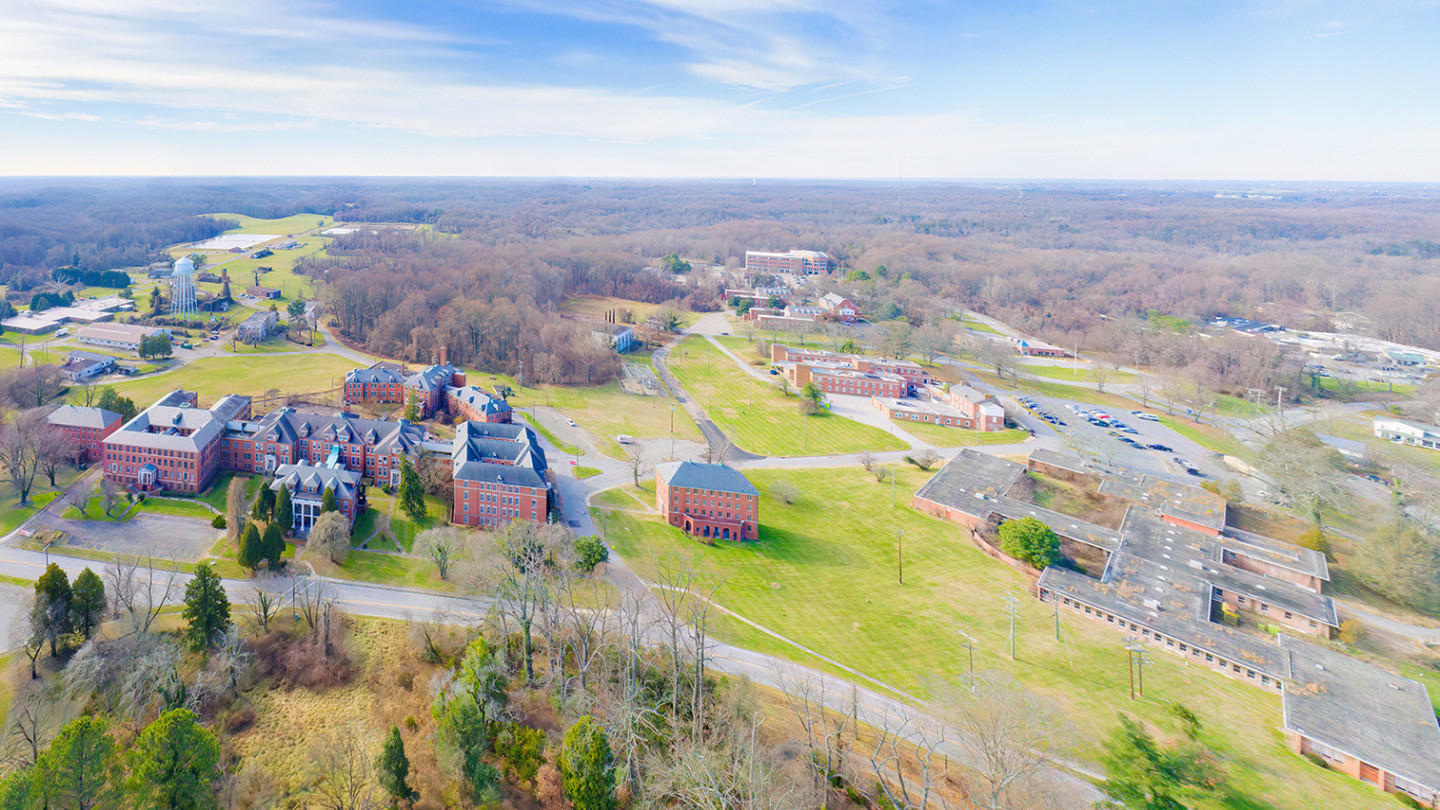
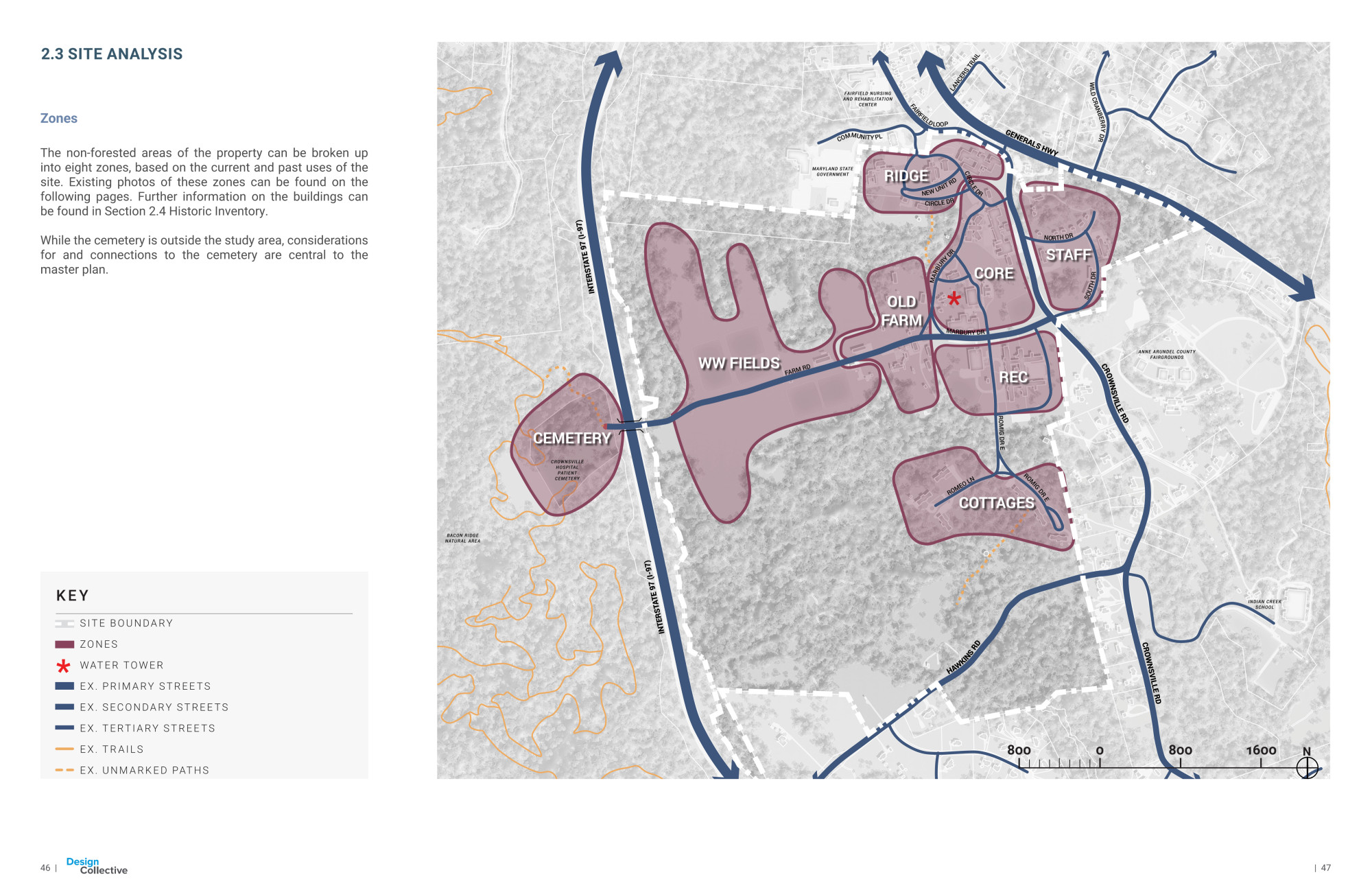
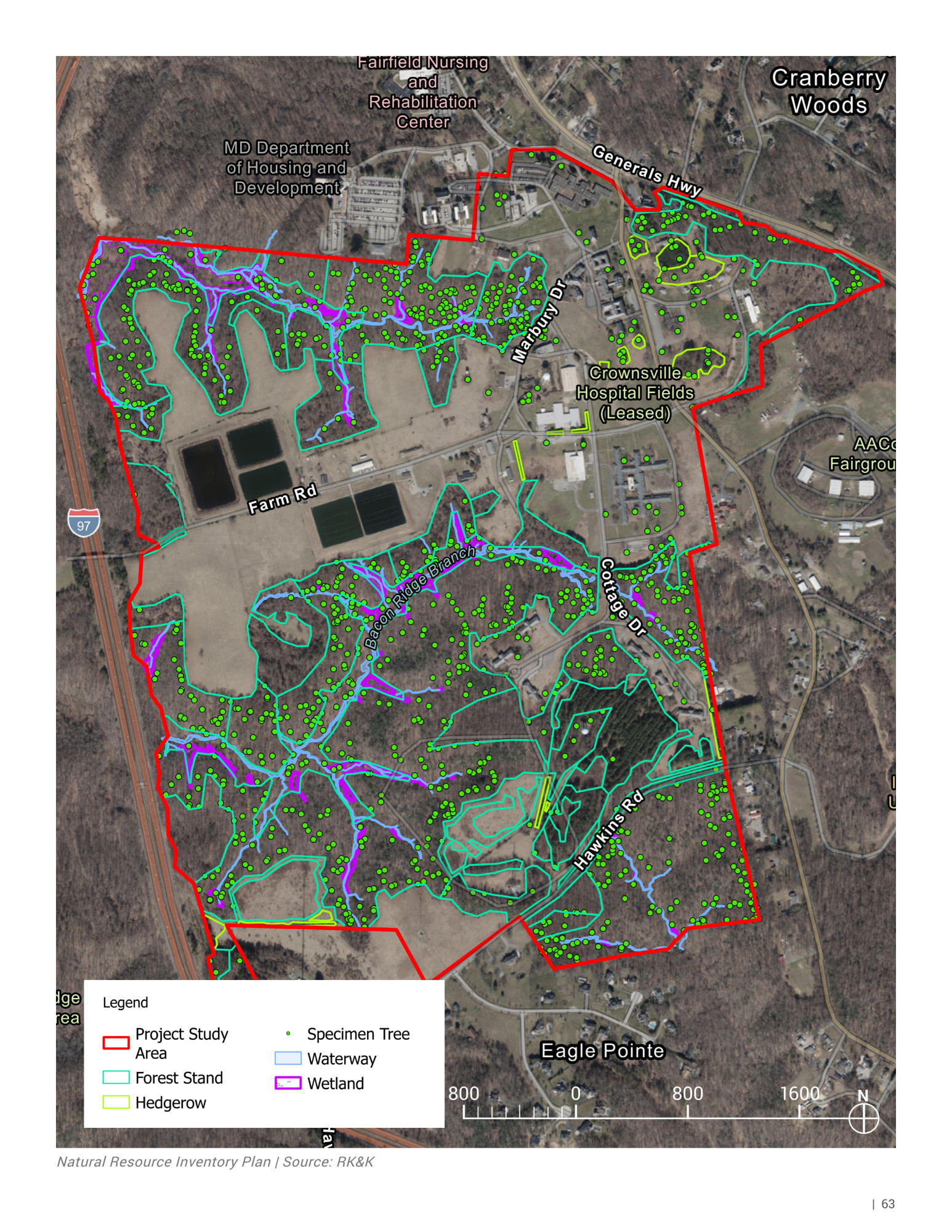
Today, the 524-acre site is 40 percent woods, with 10 healthy hardwood forest stands and several streams. In the forest, deep ravines make for dramatic views, while the developed parcels are flat or gently rolling. More than 70 structures in various states of disrepair - including stately Georgian buildings, water towers, and an old power substation - cluster here and there on the property, mostly in the core of the hospital campus. The athletic fields are recognizable as such; the fallow farm grounds, however, look like meadows. Belt points to cracked asphalt once used as a parade route.
Belt, who was recently awarded the Excellence in Community Impact award from the Maryland Historical Trust, has been pushing for a project to honor Crownsville's history for years. As consultants dug into the site's history, inventorying and studying its natural and built environments, she provided context through her stories and lived experience, adding emotional depth to the process. Now she was witnessing the old hospital on the cusp of potential transformation.
A small group, including Reetz and Bedwell from Design Collective, accompanied Belt into the first building, where trespassers had stripped the plumbing and copper wiring. Broken window glass crunched underfoot in old offices, and raccoon scat littered the halls. Trespassers had held raves in one of the larger day rooms, and neon graffiti covered the walls. Still, Belt found hints of the familiar. Light streamed in through large multipaned windows and scattered in the tall-ceilinged rooms through which she once escorted patients. A lunch tray evoked the hamburgers she ate there. She paused before an old cast-iron tub where she once bathed patients, a favorite part of her job. When she passed the elevator, she dug into her pocket for a pair of keys she once used to operate it. She inserted the key into the keyhole and turned. "These keys still work," she marveled.
Related News & Projects
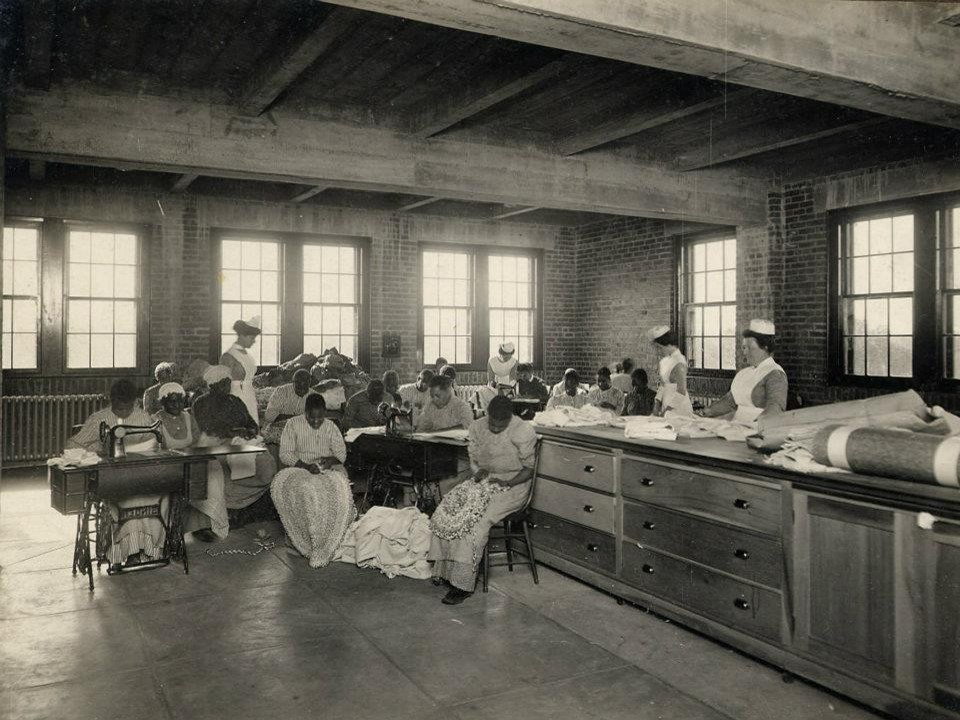
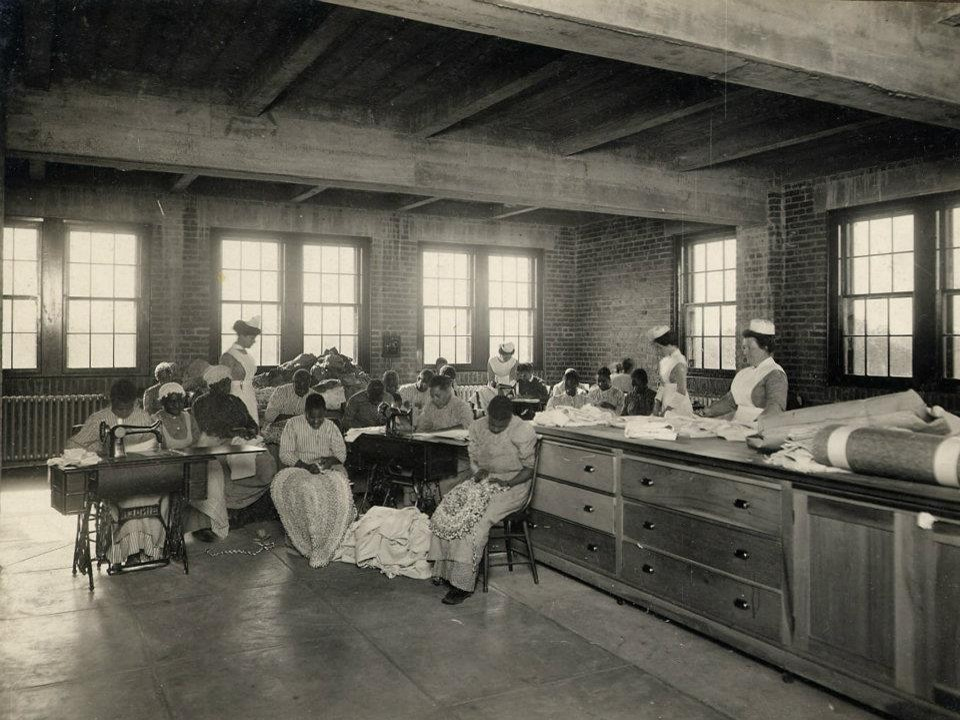
In 1888, the newly formed Maryland Lunacy Commission declared the need for an institution for Black mental health patients. "The condition of the negro insane is in many cases deplorable," the Commission's 1909 report reads. But the hospital the state set up in 1910 on 566 acres of arable land and woods did little to improve those conditions. It housed only Black patients and required them to build their own wards and work the gardens to feed themselves. According to Antonia Hylton's 2024 nonfiction account, Madness: Race and Insanity in a Jim Crow Asylum, patients lacked adequate clothing and shoes, lived in facilities that were perpetually overcrowded and short-staffed, and were subjected to painful experimental procedures, lobotomies, and shock treatments. More than 1,700 Crownsville patients are buried in a cemetery adjacent to the grounds. Their foot-long gravestones, most of which lack names and are marked only with numbers, snake across the ground.
"These were human people and they were treating them like animals, like cattle," says Jacqueline Boone Allsup, a longtime Crownsville employee. "I don't know what their thinking was....They couldn't have been thinking that these are sick people."
Things changed slowly as the number of Black staff members gradually increased. The first, a psychologist named Vernon Sparks, was hired in 1948. By 1956, nearly half the staff was Black. It was considered a place of opportunity for people like Belt's mother, who was part of the first wave of Black hires. For patients, the new staff often provided more compassionate, more dedicated care. In 1963, Maryland desegregated its state hospital system for patients, ending Crownsville's status as a Black-only facility, though its Black staff continued to grow. By the time Belt came on board nearly a decade later, the majority of doctors, nurses, aides, and staff were Black.
Allsup started working at Crownsville in her 20s, around the same time as Belt. On her first day, she was shocked to encounter elderly patients sitting in gowns and swore she would not return. She'd always been motivated by a desire to help people, though, and returned the next day and signed up for training. She took every class Crownsville offered as part of its staff education program, eventually becoming a registered nurse and earning a master's degree. She stayed at Crownsville for 30 years and cared devotedly for the patients. The hospital still had problems, but for many it evolved into a place of real healing. The land was part of their recovery.
On this visit, Bedwell drove to a group of cottages nestled in the woods. Each building once housed a different patient population: adolescents, people with acute issues, or those with criminal records. Nearby, Reetz pointed to a stand of pines, the only such outcrop in the forest, which was planted by one of the superintendents, and Belt waved at the roof of what had been her mother's house, visible over a fence. When the county took over the property, environmental scientists with RK&K surveyed the woods and identified 1,266 trees larger than 30 inches in diameter - giants that likely predated and survived the hospital.
Sonia King, a retired minister, was a patient at Crownsville in 1979. "Faye Belt would come and walk me around and that was helpful," she says. "I was very athletic and I like nature and I needed that. It helped me to be able to get off the ward and walk around."
King met me in the Meyer building, a 1954 multipurpose structure where she had spent time recovering decades ago. As she strolled the tiled halls assuredly, she felt lucky that her experience at Crownsville was a positive one. In larger part, she says, it was because she felt seen and care for by the Black staff, some of whom, like Belt, she knew from the community. It informed her career as a recreational therapist and, once she joined the ministry, her work with incarcerated people. Crownsville healed her, and Crownsville's transformation into a memorial park can heal her community too, she says. "it" reminds me of the story in the Bible about Cain and Abel," says King. "Cain killed Abel but Abel's blood was crying out from the ground, like, 'Do Something!' And so, for me, it's like all the people that died here, that were experimented on, their blood is crying out from the ground, 'Do something different. Make this right for us so this doesn't happen again.'"
Since the 1800's, every state has run public psychiatric hospitals, but the number of operating facilities has gone from 322 in 1950 to 193 in 2023. Many closed campuses have been redeveloped for uses unrelated to mental health care, including hospitality and luxury housing.
At Crownsville, proposals to make the grounds into a sports complex floated around for years but were opposed by the local Black community, many of whom had ties to the hospital. Instead, energy started building to preserve but transform the campus. In 2013, Allsup, who served as the president of the Anne Arundel County Chapter of the NAACP, penned a letter to the governor asking the state "to investigate and publicly acknowledge the historical mistreatment of African Americans in the state's mental health system" and suggesting, as a remedy, "a dedicated museum or other public venue." At the same time, the journalist Antonia Hylton had started meeting with community members who had ties with the hospital. For the first time, people were talking openly about the bad and the good they saw there.
In the United States, it is rare for sites of violence or tragedy to be commemorated or memorialized. In his book Shadowed Ground" America's Landscapes of Violence and Tragedy, the geographer Kenneth Foote observes that nothing happens at most of these sites, and the land is simply reused. In the rare instances when commemoration does occur, writes Foote, it's because a community has felt a great sense of loss or believed that a moral lesson is associated with the site. Crownsville Hospital fits both categories.
"We wanted the history of Crownsville not to be forgotten," says Allsup, who served on the Crownsville Advisory Committee and the Cultural History Subcommittee. This history includes its racist legacy of injuring and assaulting Black patients but also its evolution as a mental health institution where progressive therapies and dedicated staff helped patients heal.
In 2022, the transfer of the property, along with $30 million, from the state to the county was finalized, and Design Collective started hosting community workshops to inform the master plan. Pittman told the firm, "Imagine the project with the most community engagement that you've ever done and double that." At the first meeting, a contingent of equestrians showed up. Bedwell doubled down on recruiting people connected to Crownsville. The project had always been driven by grassroots interests - by people like Belt - and as Design Collective worked, they wove equity into the fabric of the plan. The final master plan opens with an in-depth equity statement written by the Equity Subcommittee. Pittman's office didn't provided details on whether the county has contracted minority-owned businesses for the work already happening on-site, as outlined by the equity statement, but says that "the county is encouraging Black-owned companies to connect with the county's [procurement program]."
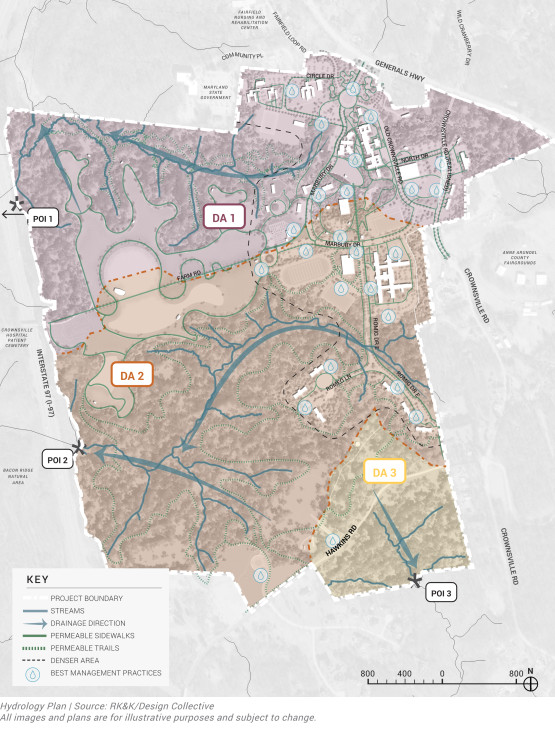
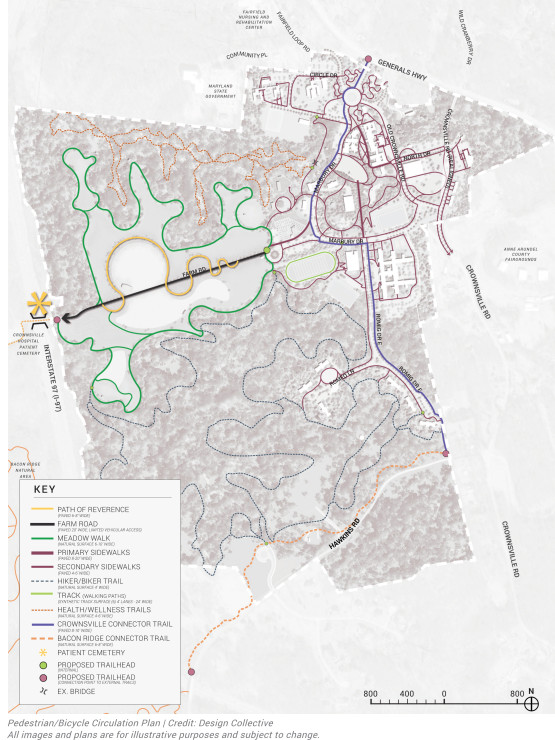
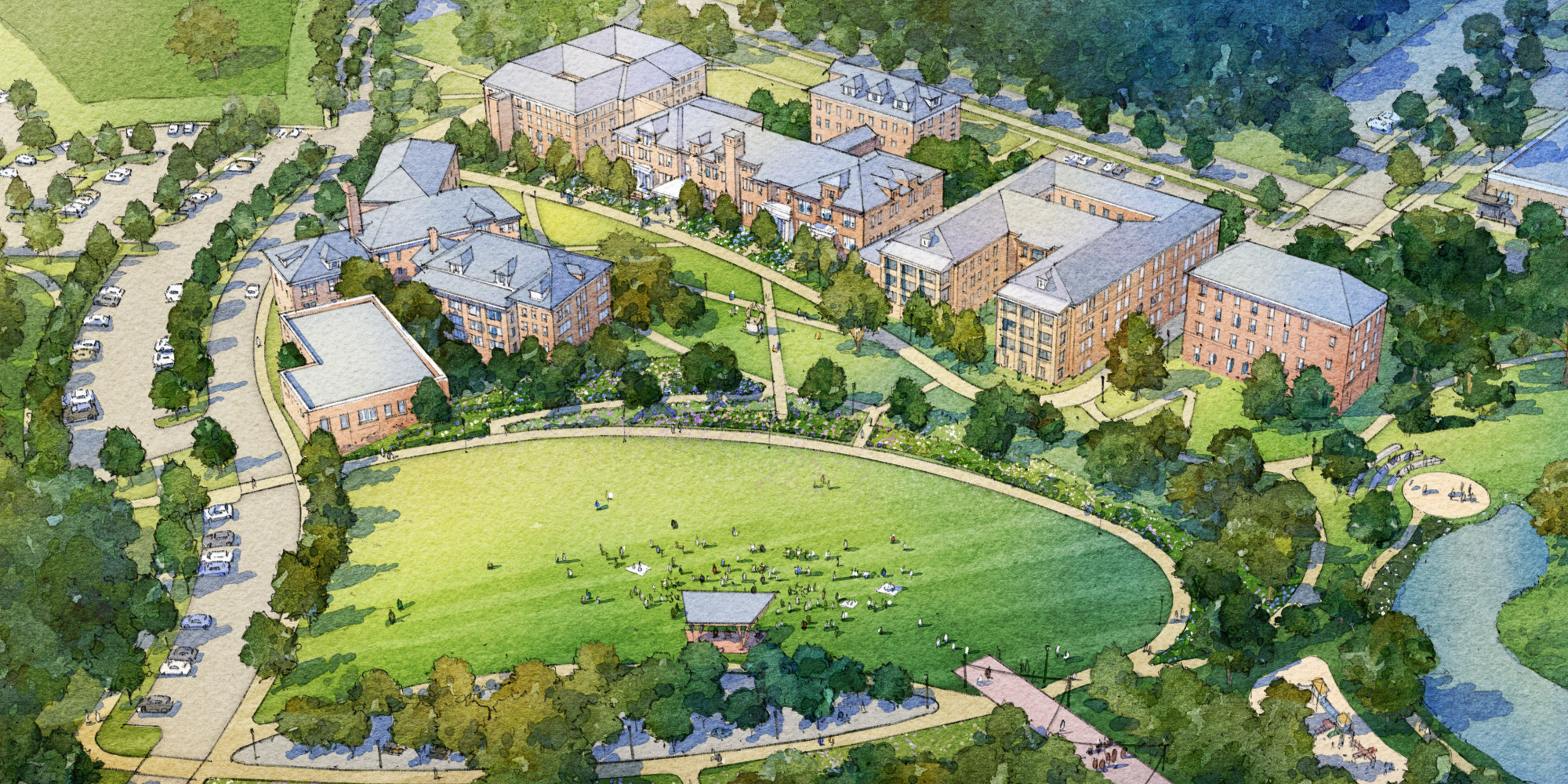
The plan includes proposals for much-needed affordable and transitional housing in the buildings where patients once lived. A museum could occupy another renovated building, housing artifacts and personal histories from Crownsville. There could be a pump track for kids who may not have access to such an activity, new trails through natural areas, a new athletic field, community gardens, and retention of the few tenants that currently occupy Crownsville buildings, including a food bank and three addiction treatment providers. At the same time, the woods, which have always served as a refuge for staff and patients, will be kept as pristine as possible. Nearly 160 acres of mostly forestland have already been placed into a conservation easement.
Design Collective's approach was to "transform but not forget" the site, says Bedwell. The master plan, which one a 2025 ASLA Award of Excellence in Analysis and Planning, applies a light touch to the land, proposing few topographical or significant changes to the landscape. "It really had to be a place where the history was in view, that you could not escape it." She cites the Holocaust Memorial Museum in Washington, D.C., and the National Memorial for Peace and Justice in Montgomery, Alabama, as examples of immersive, emotionally poignant memorials. Fully using the Crownsville grounds could command similar emotional weight. "Walking the buildings and feeling that intensity of occupying the space has a power to it," Bedwell says.
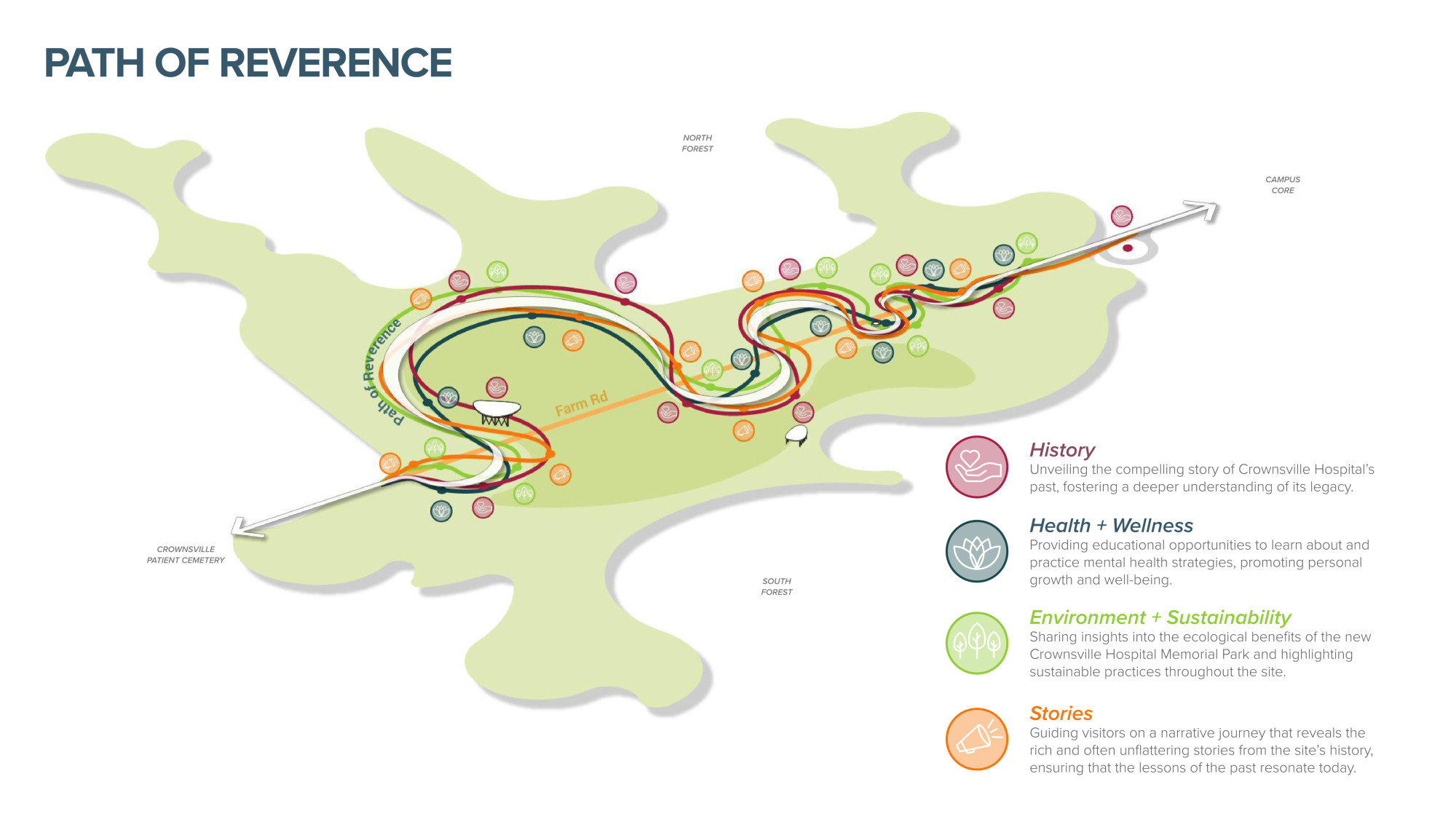
The centerpiece of the plan is the Path of Reverence, a new memorial walkway through the site. Farm Road, a narrow, paved access road, runs west from the core of the campus and terminates at the patient cemetery on the western edge.
Sewage treatment ponds line the road, one of the more detrimental additions to the historic campus, Bedwell says. Design Collective recommended draining the ponds and regrading them, work that's already begun. In their place, the Path of Reverence will meander through a meadow with information kiosks, oral history listening stations, benches, and pollinator gardens while surrounded by natural areas with existing trails.
"Mental health is a different type of journey for everybody. It's not, "You solve the problem and boom, you're fixed,'" Reetz says. "It's much more circuitous. So, we wanted people to experience and move into the landscape in a way that was nonlinear, that allowed them to do it at their own pace, that allowed the experience to be different every time they went out."
While utility and road work, trail development, and studies on building reuse are underway, the initial $30 million from the state legislature is a drop in the bucket for what's needed. This will be a years-long project requiring, perhaps, hundreds of millions of dollars, says Pittman, who ran his election campaign largely on this project. "It was very important to leave the project in a place where it would be political suicide to change course," he says.
Waiting for the funding of various pieces of the project requires persistence, but it also means that everyone is still free to imagine how the master plan will unfold, how the stories the land holds will emerge aboveground, and who they'll touch. "Wouldn't it just be the best thing in the world," says Reetz, "if a small kid struggling with mental health came here and through the stories that are being told said, "There are people like me; I'm not alone.' That would mean everything in the world. I think that then this project would be successful."